

Music
*Music has not been viable for September 2026. We hope to be able to return to this offer in 2027.*
Music gives soul to the universe, wings to the mind, flight to the imagination and charm and gaiety to life and everything.
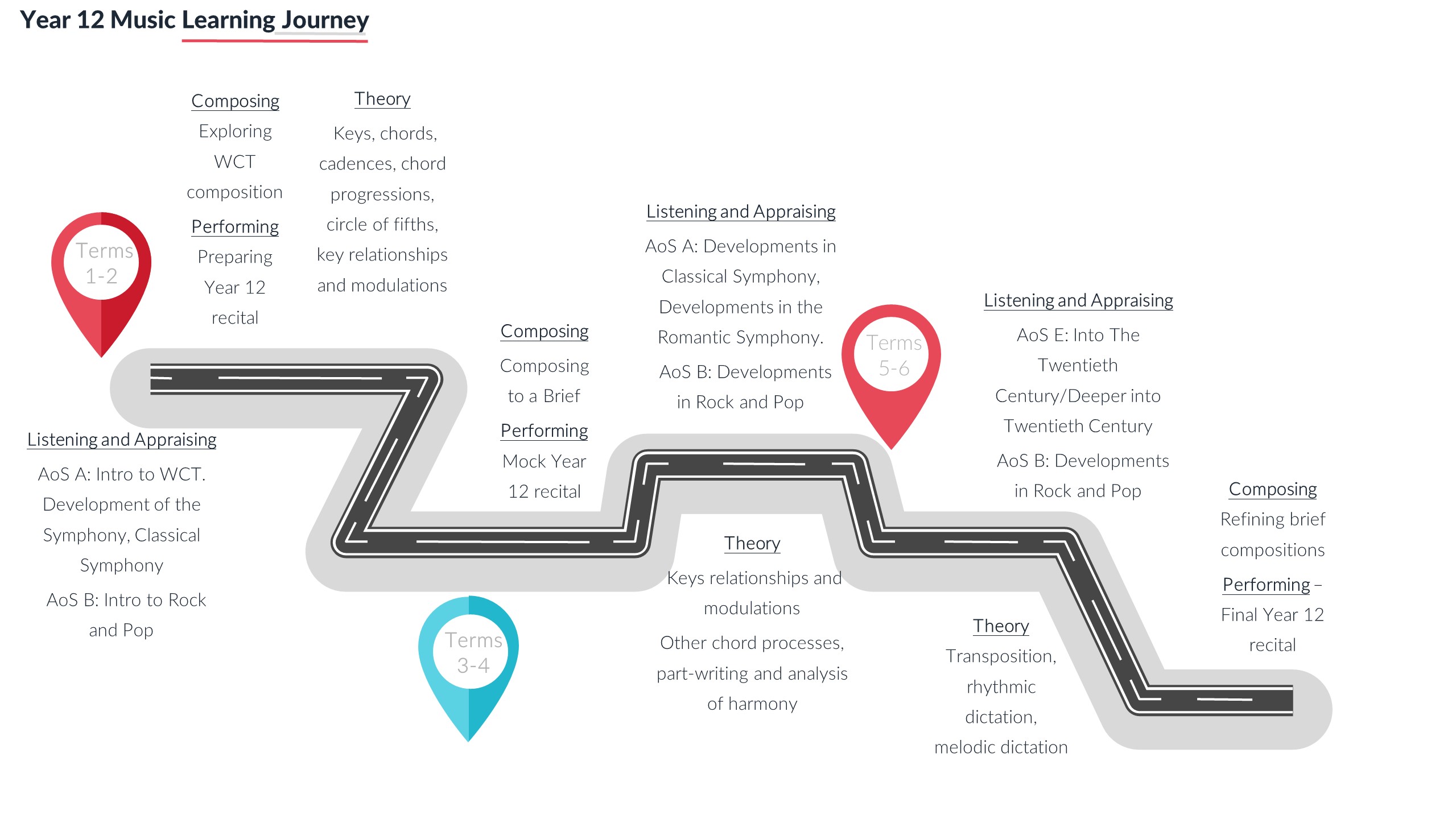
Our Curriculum content reflects the musical characteristics of one area of study.
Learners must choose either Option A in both Components 1 and 2 or Option B in both Components 1 and 2.
Component 1: Performing
Performing Option A: Total duration of performances: 10-12 minutes, 35% of qualification, 108 marks
Option B: Total duration of performances: 6-8 minutes, 25% of qualification, 72 marks.
Option A: Performing (35%) Learners are required to give a performance consisting of a minimum of three pieces. At least one of these pieces must be as a soloist. The other pieces may be either as a soloist or as part of an ensemble or a combination of both. One piece must reflect the musical characteristics of one area of study. At least one other piece must reflect the musical characteristics of one other, different area of study. The total duration of all the pieces must be between 10 and 12 minutes.
Option B: Performing (25%). Learners are required to give a performance containing a minimum of two pieces either as a soloist or as part of an ensemble or a combination of both. One piece must reflect the musical characteristics of one area of study. The duration of the complete performance must be between 6 and 8 minutes.
Component 2: Composing
Option A: Total duration of compositions: 4-6 minutes, 25% of qualification, 72 marks
Option B: Total duration of compositions: 8-10 minutes, 35% of qualification, 108 marks
Component 3: Appraising
This examination will assess knowledge and understanding of music through three areas of study. Area of study A is compulsory and learners then choose two further contrasting areas of study: one from either area of study B or area of study C or area of study D, and one from either area of study E or area of study F.
Area of study A: The Western Classical Tradition (The Development of the Symphony 1750-1900)
Choose one from: Area of study B: Rock and Pop; Area of study C: Musical Theatre; Area of study D: Jazz
Choose one from : Area of study E: Into the Twentieth Century; Area of study F: Into the Twenty-first Century

Entry Requirements
Please see the entry requirements document here
Is This Course Right For Me?
Firstly, you need to be a highly organised individual. You will need to be practising your instrument regularly. You will need to be ready to be explore new methods of creativity in composition. You will need to be ready to analyse set works for musical features. The nature of the course requires that you are able to work independently and organise your time appropriately to meet deadlines. You will need to be highly committed to study in order to achieve at the highest level in this course.
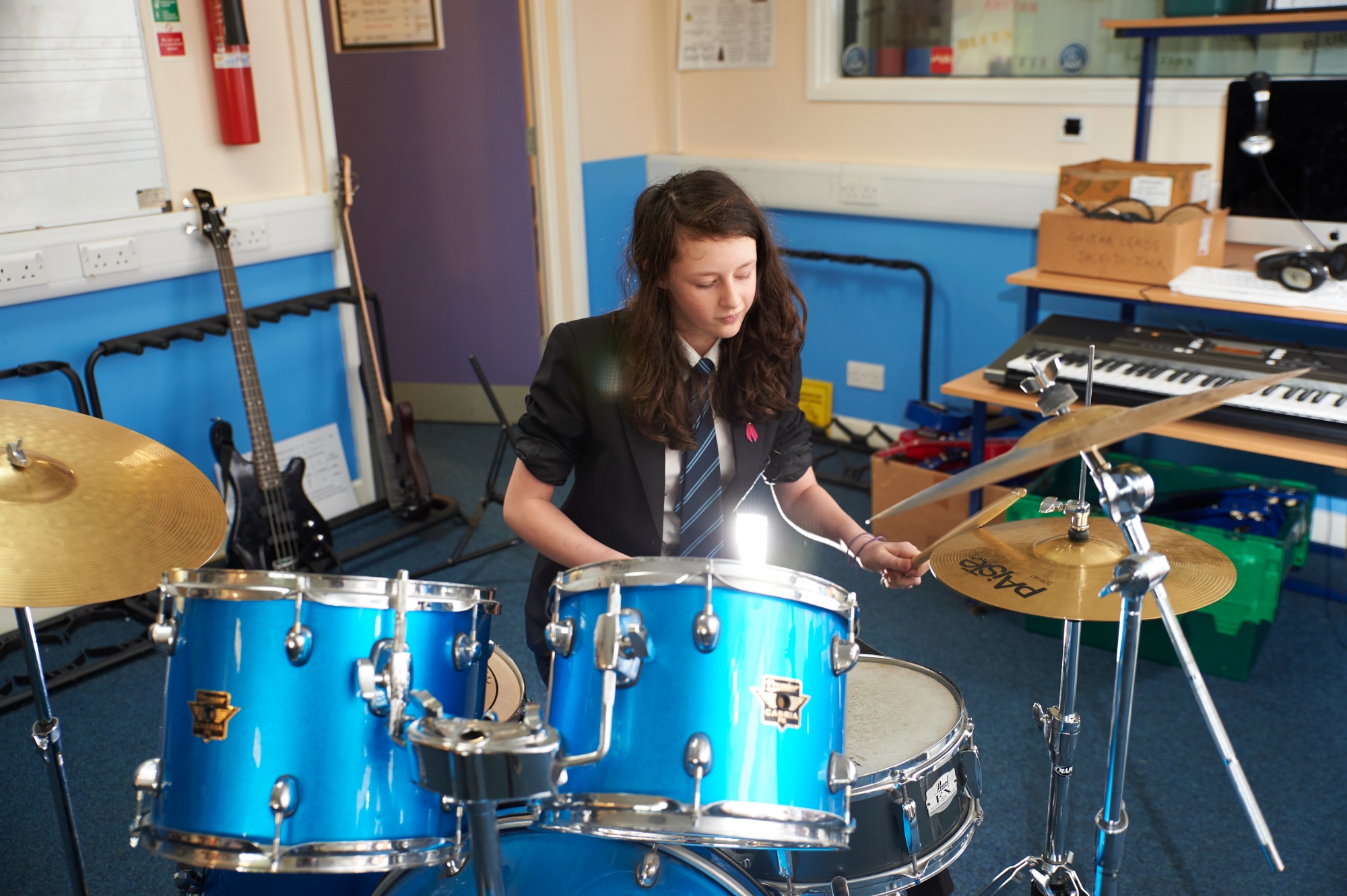

Please watch our short video to see what studying Music at Guilsborough Sixth Form is like.
Studying Music alongside my more traditionally academic subjects gives me great variety and will allow me to access a wider range of career options later in life
Where will A Level Music take me past Sixth Form?
CAREERS
In the future, Creativity is going to be one of the most important and in-demand skills at work (World Economic Forum.) When business leaders across the world were surveyed, they voted creativity as the most important workplace skill to help their businesses survive and grow. This means that the study of creative subjects, like Music, is becoming even more important and relevant to young people to give you the chance to succeed – whatever your ambitions. At the same time, you will find many opportunities to develop and improve your personal wellbeing both independently and as part of a wider community.
Where could A-level music lead? It could lead to a Music degree: here’s what Oxford University says about theirs: “The varied nature of the course enables students to develop highly desirable skills in areas such as self-management, creativity, data analysis, performance, teamwork, problem-solving, and communication, all of which makes them an attractive prospect for potential employers… other popular destinations for Music graduates… include broadcasting, publishing, law, politics and the Civil Service. Rather than limiting your career prospects, a music degree opens doors to a wide range of careers.”
If you don’t want to be a musician or study music at University, A-level music is still a smart choice. It can open doors to a range of education and employment pathways in:
Music.
Being a musician isn’t the only career in music – other options include being a sound technician, community musician, music therapist, teacher, or private tutor, or a range of careers in the music industry, in a concert hall or music venue.
The arts/creative industries
This might include work in film, TV, theatre, radio, arts administration, or creative education.
Professions such as medicine, law, accountancy
Music is highly regarded as an academic subject and so could complement your other studies in leading to a professional career.
Any other pathway a young person might choose A-level music provides a range of transferable skills that will provide a good foundation, whatever pathway you choose.
UNIVERSITY
Example of university courses and grades required
- Cambridge University – 152 UCAS Tariff Points
- Durham University – 136-160 UCAS Tariff Points
- Newcastle University – 128-152 UCAS Tariff Points
- Surrey University – 120-128 UCAS Tariff Points