

Pupil Premium
Guilsborough Multi-Academy Trust is dedicated to diminishing the attainment difference between those that are deemed to be our most deprived students and their peers through a variety of methods, one of which is via the Pupil Premium Fund.
Introduced by the government in April 2011, the Pupil Premium Fund assists schools in addressing the underlying inequalities between eligible children and their peers. The Pupil Premium funding is allocated to students between Reception and Year 11 (Years 7-11 at Guilsborough Academy)
-
From 2026-2027 the funding is set at:
Group
Pupil premium per pupil 2026-27
Pupils in years 7 to 11 recorded as FSM Ever 6, including eligible NRPF pupils
£1,100
Looked-after children (LAC) in year groups reception to year 11
£2,690
Previously-LAC in year groups reception to year 11
£2,690
Pupils with parents in the regular armed forces recorded as 'Ever 6 service children'*
£360
Free school meals and pupil premium | West Northamptonshire Council
Are you eligible to apply for Free School Meals?
You may be entitled to free school meals for your child(ren) if you receive one of the following benefits:
- Income Support
- Income Based Job Seekers Allowance
- Child Tax Credit Only (with income up to £16,190) with no element of Working Tax Credit
- National Asylum Seekers Support
- Guarantee Element of the State Pension Credit
- Employment and Support Allowance
- Universal Credit (Income Related)
More information and the application process can be found on West Northamptonshire County Council website here.
Guide for Supermarket Vouchers
Who and why? Our moral compass and intent
Who are our vulnerable learners
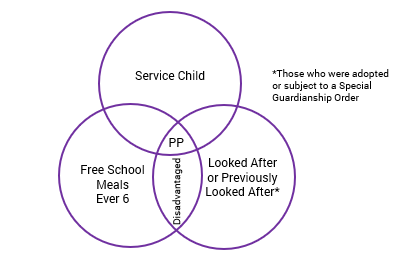
Research has found that a child’s socio-economic background directly impacts their learning and subsequent opportunities in adult life. These factors are beyond the child’s control, such as their parents’ income. The Education Endowment Foundation (EEF) has found that Disadvantaged Students:
•Start Primary School 11 months behind their non-disadvantaged peers
•Leave Secondary School 1.5 years behind their non-disadvantaged peers
•Spend 30% less time each day on educational activities
Cultural capital is the essential knowledge that children require to prepare them for future success and contribute to the world around them. Cultural capital is intrinsically linked to economic and social capital, meaning that an individual’s cultural capital is a significant indicator of how well they will succeed academically.
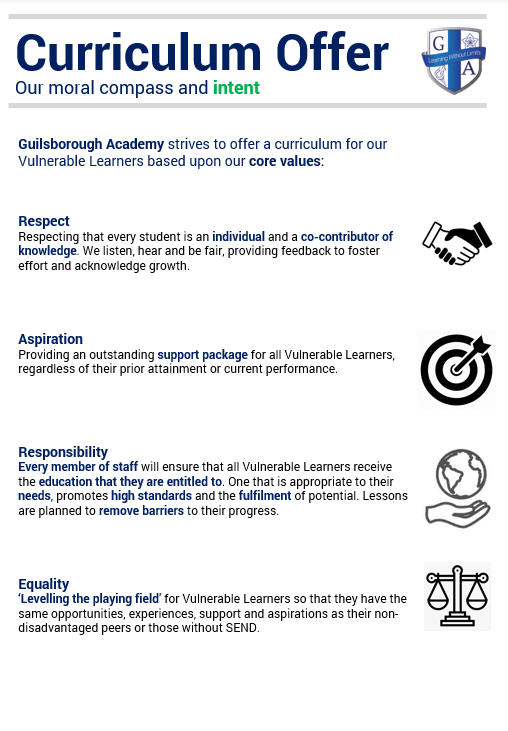
Our Curriculum Offer

Policies can be found here